

Breakfast Nook (in final stages)
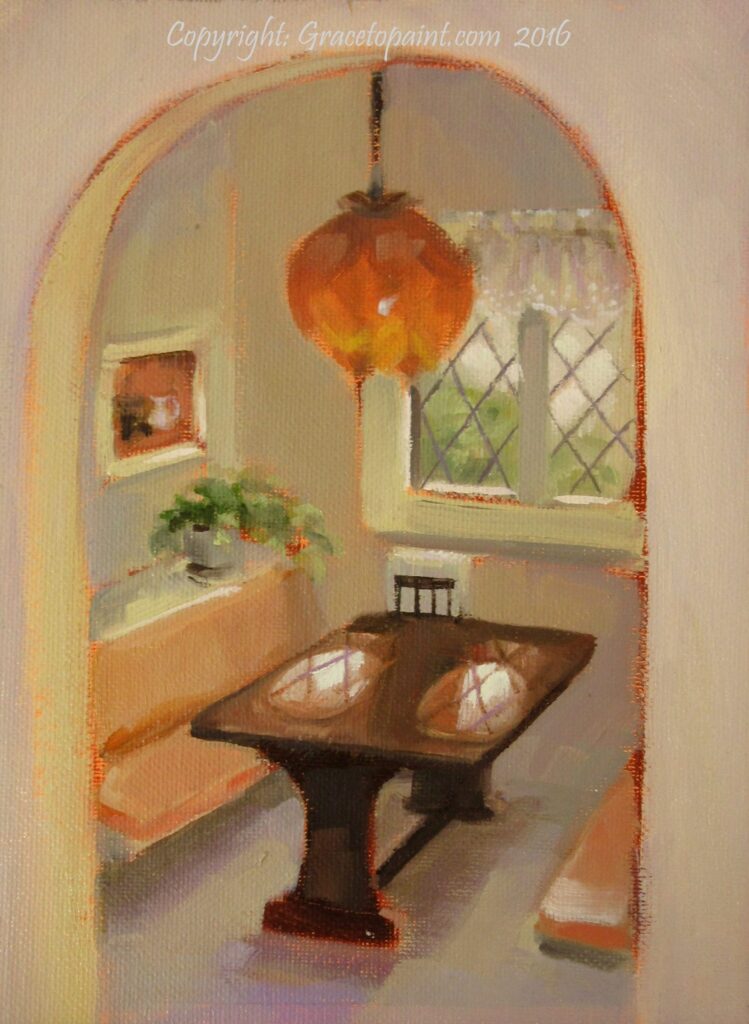
Now “Breakfast Nook” is nearing the finish line. What I will still do in the final work on this large painting is clean up any muddy looking color, check the balance of the lights and the darks, and make sure nothing is jumping out too much either by color or by error! This is the cozy place in my father’s kitchen where many a meal with his wife was enjoyed, and many bills have been paid. It is where I often sat with him when I visited. Now in the transitions of aging, he will sell his home of 39 years and the nook will be relegated to memory.
Breakfast Nook (Developing top layers)
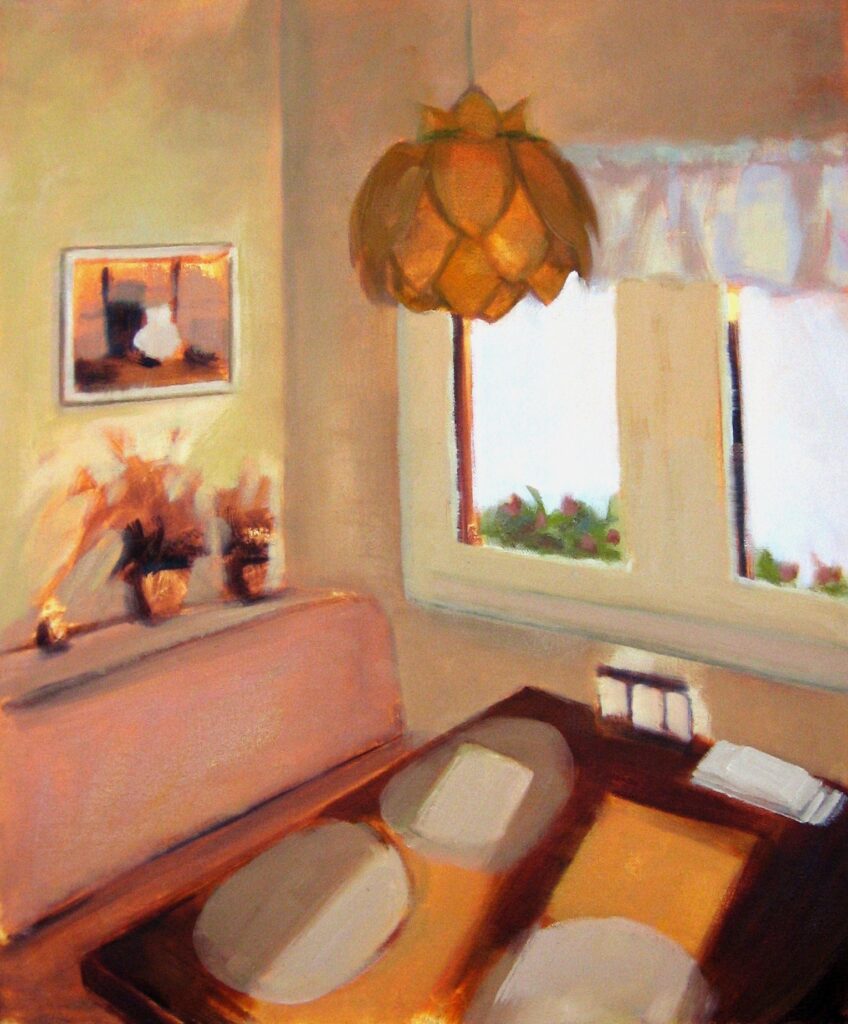
Now comes the finer work of develping the details of “Breakfast Nook,” and here is where I can lose simplicity if I am not careful. To get too refined and perfect will pull me away from simple impressionistic strokes of paint into a tedious photo-realism of defining every detail to perfection. There is still much to complete, but compared to the previous two posts, you can see some progress, I think.
Breakfast Nook (Second Layer)
The second layer of paint is usually called the “block in,” or simply covering the canvas with undertones of color that will be developed further later on. Now the interplay of light areas and dark areas is getting expressed in the application of flat tones of paint. The painting already states that the light will be “cool” and so the shadows need to be “warm.” This is a rather large canvas, taking a lot of muscle and paint, but there is still much more work to do…
Breakfast Nook (First Layer)
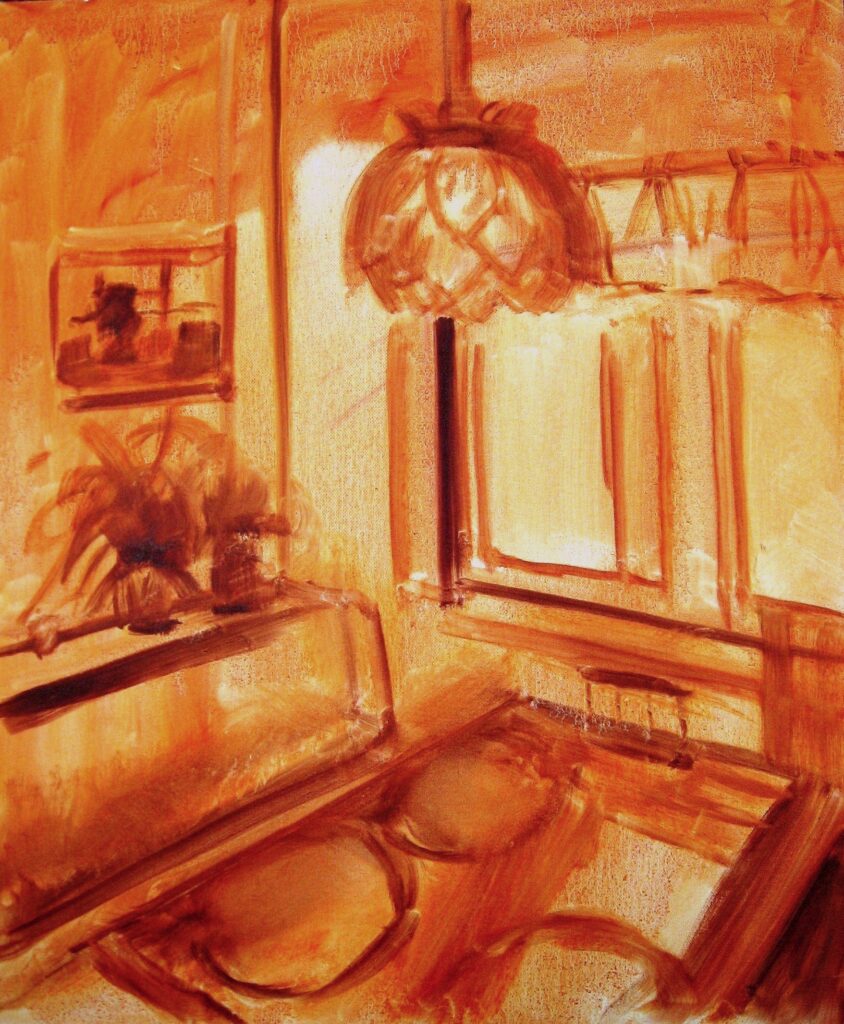
On a toned canvas panel, the layout and drawing for “Breakfast Nook” was set. This is generally the kind of loose drawing done in traditional painting, with only a brush and thinned paint. At this stage, I think about where the lightest and darkest areas will be, and what patterns they will create. However, the above does not yet show all the darkest darks which will fall mainly to the wooden table.
Begonia Heads
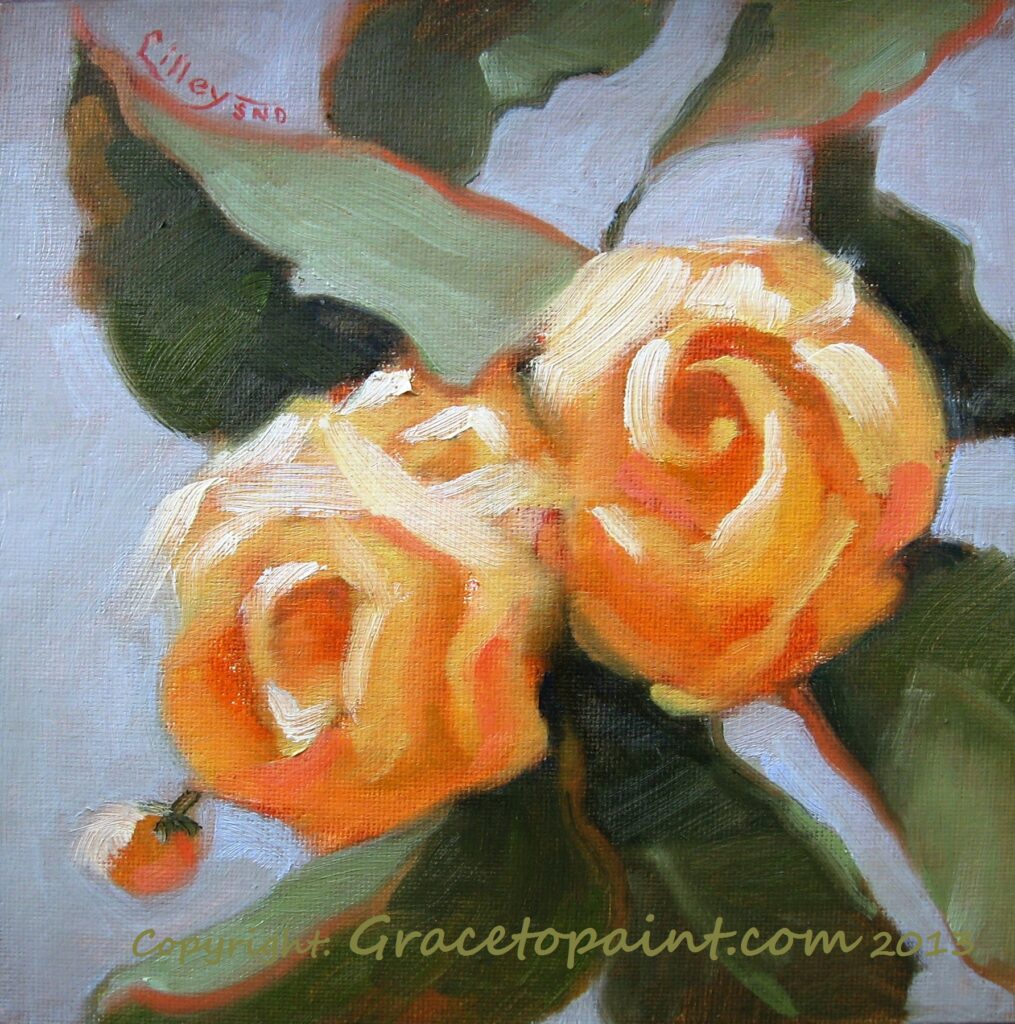
Similar to roses in structure, these begonia heads lured me into their spherical interiors with winding petals. They provided an opportunity to paint small and bold for a simple statement. Often, in close attention to plants, there is a painter’s surprise, like the pinkish lines among the the greens. Surely an impressionistic painter would find reason to exaggerate the find.